Multigenerational Housing in Vancouver: Strategies for the Sandwich Generation in 2026

Quick Answer: If you're supporting aging parents and adult kids who can't afford to leave, you're in the sandwich generation and you're not alone. About 2.5 million Canadians aged 35–64 are in the same position. In Metro Vancouver, where assisted living runs $4,500–$8,500/month and a one-bedroom rents for over $2,200, the financial pressure is real. The five housing paths families are choosing in 2026 don't all require building a multiplex and the right one depends on your equity, your parents' mobility needs, and how much complexity you're willing to manage.
Here's what most people get this wrong: they frame multigenerational housing as a sacrifice. Something you do because you can't afford not to. But the families I work with who navigate this well the ones who actually land in a situation that works for everyone treat it as a strategy problem, not a guilt problem.
The numbers in Metro Vancouver make it one worth solving. Private assisted living in BC runs between $4,500 and $8,500 per month, according to Live Peace Seniors Home Care (March 2026). A one-bedroom apartment in Vancouver averaged $2,226 in May 2026, per liv.rent's monthly report. Your 26-year-old isn't paying that on a starting salary. And you're not made of money either.
This post is about the five housing paths Vancouver's sandwich-generation families are actually choosing in 2026 not the build-a-multiplex fantasy that dominates most multigenerational housing content, but the full range, ranked by complexity and cost.
What Is the Sandwich Generation, and How Big Is the Problem in Vancouver?
The sandwich generation refers to adults typically 35 to 64 who are simultaneously supporting aging parents and dependent children or young adults who aren't yet financially independent.
According to Statistics Canada's 2022 Canadian Social Survey, 1.8 million Canadians (13% of all unpaid caregivers) were sandwich caregivers. A broader definition that includes financial support (not just physical care) puts the number at around 2.5 million, or roughly 28% of Canadians aged 35–64, per myCareBase (April 2026). The most common situation: supporting parents or parents-in-law while also raising children under 15.
BC sits at a 3.7% multigenerational household rate second only to Ontario with Surrey reaching 9.6% of all households, the highest in Metro Vancouver (Statistics Canada, 2021 Census). That's not cultural preference alone. It's math. When assisted living costs what it costs in this city, keeping a parent close starts looking different from how it first felt.
The housing problem for sandwich-generation families isn't just emotional. It's structural:
- The parent problem: Private assisted living is $4,500–$8,500/month. Government-subsidized care has long waitlists. Many families end up as the default care plan, whether they planned for it or not.
- The adult kid problem: A one-bedroom in Vancouver averaged $2,226 in May 2026. Surrey is the most affordable at $1,704/month. Young adults earning $55,000–$75,000 gross are paying 40–60% of take-home pay in rent and saving nothing for a down payment.
- The homeowner's problem: You're probably the one with equity. And everyone is looking to you to solve it.
Why the "Just Build a Multiplex" Answer Misses Most Families
Most multigenerational housing content in Vancouver focuses on Bill 44 multiplexes and for good reason. The legislation is genuinely transformational. Bill 44 (effective June 2024) and the follow-on Bill 25 (compliance deadline June 30, 2026) require all BC municipalities to allow 4–6 units on standard single-family lots, no rezoning required.
But building a multiplex takes 12–24 months, $1.6M–$2.1M in construction costs for a full fourplex, and a level of disruption that most families with a 78-year-old parent and a full-time job simply can't absorb. The build path makes sense for some but it's not Path 1. It's Path 5.
Here's what I actually see families doing.
The Five Paths: Ranked by Complexity and Cost
.jpg)
Path 1 — Buy a Home That Already Has the Configuration
This is the most underused option and often the fastest. Buy a detached home or townhome that already has a legal secondary suite, a ground-floor bedroom with accessible bathroom, or a separate laneway unit and you skip the permit timelines entirely.
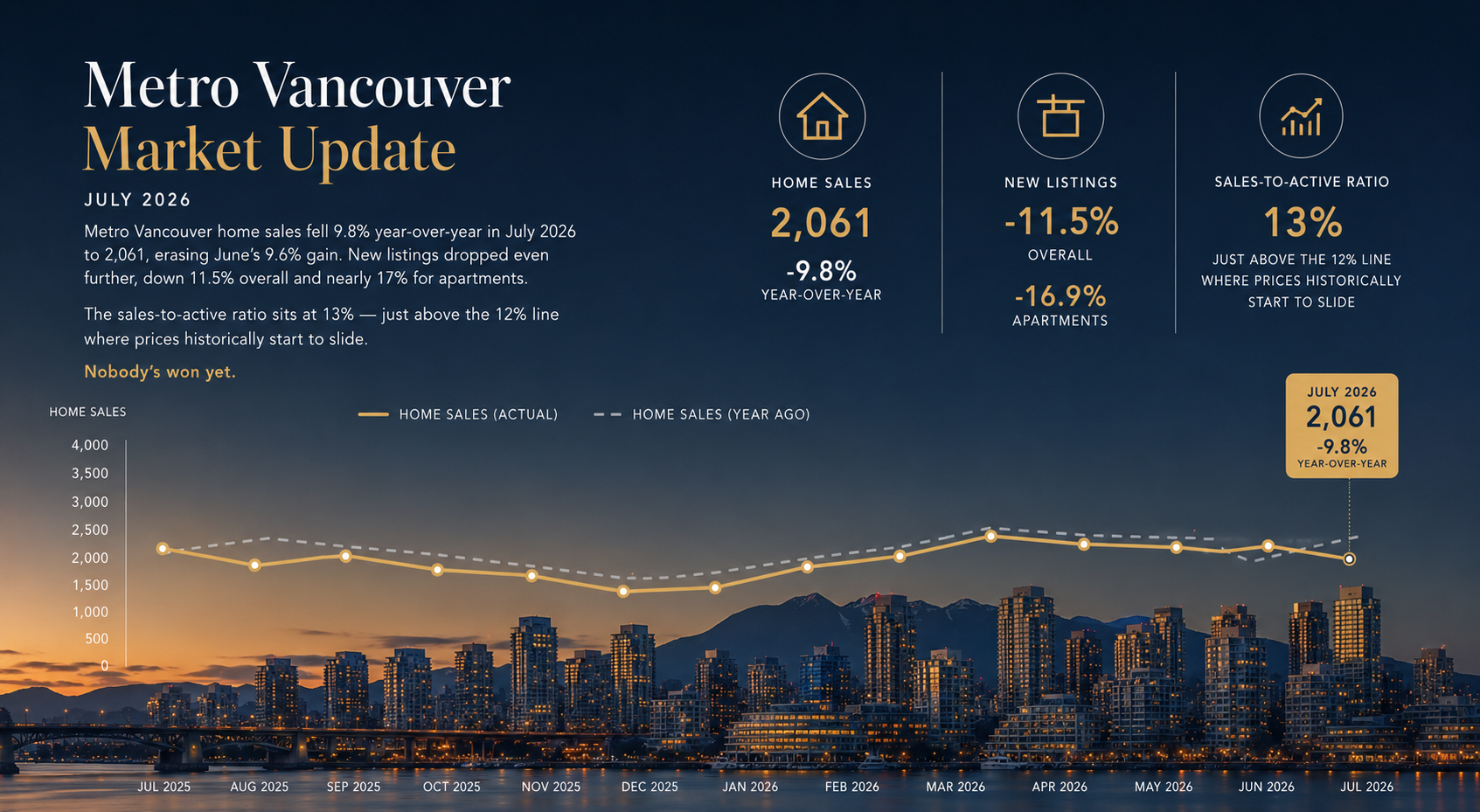
In the current Greater Vancouver market, this path has real teeth. According to Greater Vancouver REALTORS® March 2026 data, the benchmark price for all residential properties is $1,104,300, down 6.8% year-over-year. Detached homes with secondary suites sit at the lower-demand end of the market right now you have negotiating room you didn't have in 2021.
What to look for in a multigenerational-ready purchase:
- Legal secondary suite — confirmed on city records, not just "there's a suite." An illegal suite means liability, insurance gaps, and potential fines of up to $10,000/day in Vancouver.
- Ground-floor primary bedroom and bathroom — critical for aging parents with mobility limitations. Most Vancouver detached homes have all bedrooms upstairs. This narrows the field, but the right house is out there.
- Separate entrance — privacy matters for everyone. Shared entrances get old fast.
- Lot that supports future densification — even if you don't build now, buying on an R1-1 lot preserves the option under Bill 44 later.
Cost range: $1.3M–$1.9M for a Vancouver detached with legal suite. Lower in Burnaby, Coquitlam, and Surrey (where the multigenerational housing trend is strongest, at 9.6% of households).
.jpg)
Path 2 — Add a Suite to Your Existing Home
If you already own and have equity, converting an unfinished basement or adding a garden suite can solve the parent problem without moving. Under Bill 44 and Vancouver's updated R1-1 zoning, most lots now permit both a secondary suite and a laneway house and the permit process has been streamlined.
A legal secondary suite in Vancouver requires: a separate exterior entrance, 1.95m minimum ceiling height, hardwired interconnected smoke alarms, fire-rated separation from the main dwelling, and a minimum 37 sq m of floor area. Skipping legalization isn't worth it illegal suites in Vancouver can draw fines and create serious insurance exposure.
Cost range: $80,000–$200,000 for a basement conversion, depending on existing conditions. A HELOC is typically the most efficient financing tool for Vancouver homeowners with equity. The federal Multigenerational Home Renovation Tax Credit (MHRTC), introduced in 2023 and permanent, provides a refundable credit at 14% on up to $50,000 of eligible costs up to $7,000 back when the suite is created for a senior 65+ or a person qualifying for the Disability Tax Credit.
The math pencils quickly. If the alternative is $5,000–$8,000/month in assisted living fees, a $150,000 renovation pays back in 18–30 months and you keep the equity.
.jpg)
Path 3 — Buy with the Parent (Joint Purchase)
More families than you'd expect are doing this. A parent who owns a paid-off home in the suburbs sells it, netting $900K–$1.4M in the current market and contributes that equity toward a jointly purchased multigenerational home in a location that works for everyone.
This path works best when the parent is mobile, cognitively sharp, and has meaningful equity to contribute. It's not without legal complexity: you need a co-ownership agreement that addresses what happens if one party wants to sell, what happens at death, and how expenses are shared. That's a conversation to have with a real estate lawyer before you make an offer, not after.
Done right, this approach dramatically increases what you can buy. A family that might stretch to a $1.6M detached in East Vancouver suddenly has $2.0M–$2.3M in purchasing power enough to buy a home that actually has the layout, suite, and lot size to accommodate everyone comfortably.
The question you should actually be asking isn't "can we live together?" It's "can we live together in a space that was designed for it?" Most family tension in multigenerational arrangements comes from the wrong house, not the wrong family.
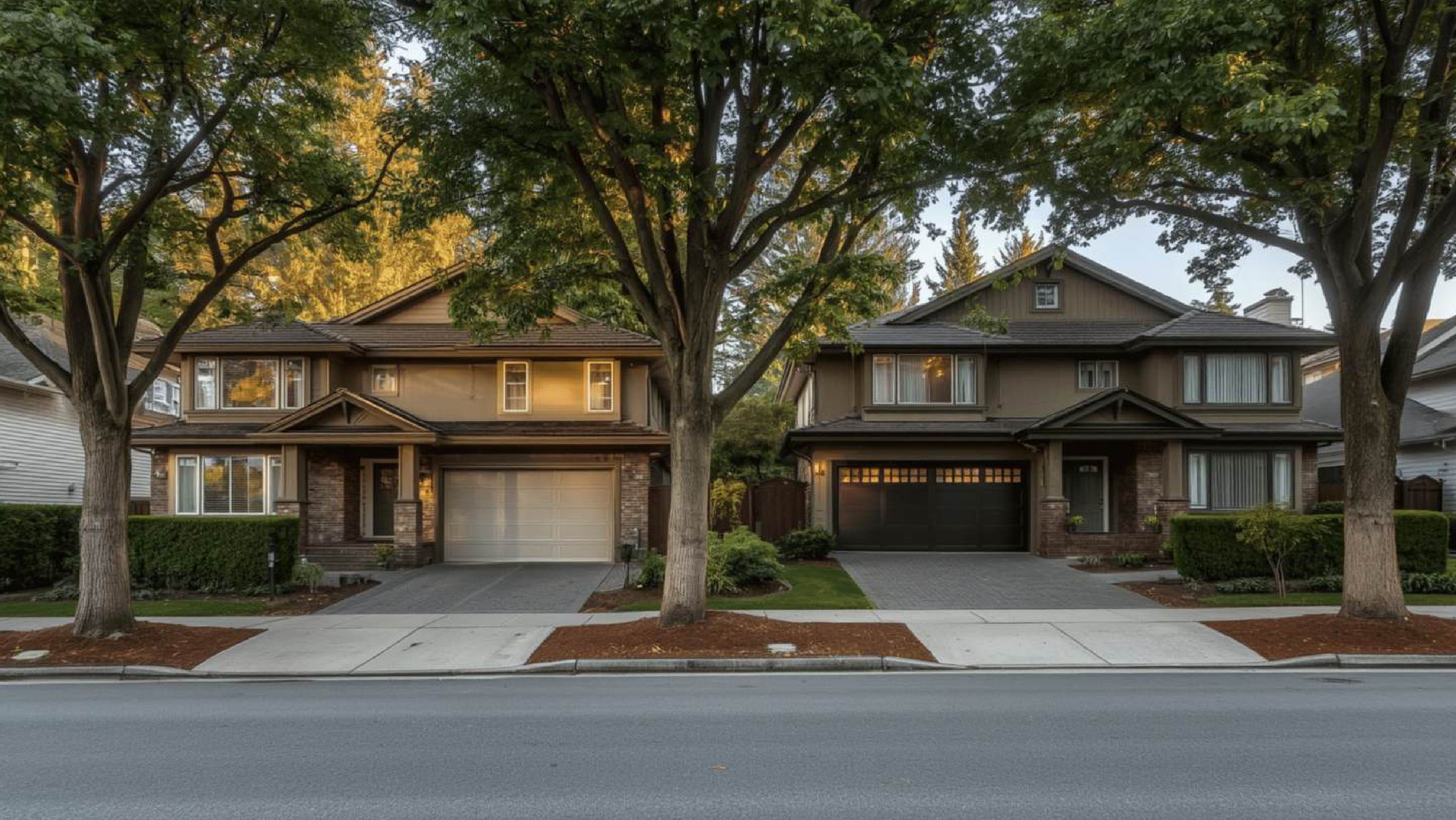
Path 4 — Buy Adjacent Properties
This one requires runway and capital, but it's worth knowing about. When two properties come available on the same block a house and a garden suite, or two side-by-side stratas some families buy both. You get true independence (your parents have their own address), and proximity. No shared walls, no shared entrance, no guilt about what time you get home.
In practice, this usually requires one of two things: significant combined equity, or a parent who's selling a high-value property and can fund their purchase independently while you fund yours.
It's rarer than the other paths, but I've seen it work well, especially in East Vancouver and the tri-cities where smaller detached homes and ground-oriented housing are more accessible.
.jpg)
Path 5 — Build a Multiplex
If you own a standard-sized Vancouver lot (33×122 ft, approximately 4,000 sq ft), Bill 44 now allows up to 4 units, 6 near transit with no rezoning required. In 2025, Vancouver issued 643 multiplex permits, a 46% increase year-over-year and the first year multiplex permits exceeded single-family permits, according to VanPlex's May 2026 permit data analysis.
The economics can be compelling. A family that builds a fourplex can occupy two units and sell or rent the others using that income or those proceeds to fund the build. But the upfront complexity is real: construction costs of $1.6M–$2.1M, a 12–24 month timeline, disruption during the build, and financing that requires construction lending rather than a standard mortgage.
This is the right path if: you have significant existing equity, patience for the timeline, no immediate care urgency, and a lot that pencils economically. It's not the right path if your parent needs something in the next six months.
What to Look for When Buying a Multigenerational-Ready Home
If you're going with Path 1 (buy a home with the configuration already in place), here's what I look for on behalf of clients in this situation.
Non-negotiables:
- Legal suite status confirmed with the city not just "it functions as a suite"
- Separate entrance that doesn't require walking through shared space
- Ground-floor bedroom and bathroom for a parent who may have reduced mobility in the next 5–10 years, even if they're fully mobile today
- Adequate natural light in the suite basement suites with minimal windows are fine for a 25-year-old, not ideal for an elderly parent
Strong preferences:
- Single-storey or rancher layout if the parent arrangement is the priority
- Wide doorways (32" or wider) easier to retrofit than most features
- Covered parking at grade, not underground
- Proximity to a transit route, especially if your parent doesn't drive
Lot factors:
- R1-1 zoning or equivalent confirms future densification rights if you want to add a laneway or convert to multiplex later
- Lot depth of at least 100 ft needed to accommodate a laneway house if you want to add one
If You're Thinking Through Your Situation, Let's Talk
Multigenerational housing decisions are as much about family dynamics and timing as they are about price per square foot. The financial piece is solvable what takes more thought is the sequence: who moves first, who contributes what, and how to buy a home that works for the situation you're in and the situation you'll be in five years from now.
If you want to map out what this looks like for your specific family, I have this conversation regularly. Book a 20-minute call →
What This Means for You: Three Scenarios
If your parent is currently in good health and living independently: Path 1 (buy multigen-ready) or Path 3 (joint purchase) are worth modeling now, before an emergency forces a faster timeline. The best time to solve this is before it becomes urgent.
If you already own a home with basement potential: Path 2 (add a suite) is likely your fastest and most capital-efficient path. Get a contractor assessment and a city pre-application review before you decide anything. The $7,000 MHRTC makes this even more compelling.
If your adult kid is the primary concern (not aging parents yet): The suite still solves it, but the legal and financial considerations shift. If an adult child is occupying the suite, you won't qualify for the MHRTC. You also need to think about whether having them there helps them save for their own future, or creates dependency that's comfortable for everyone but solves nothing long-term.
Frequently Asked Questions
Q: Can I use the Multigenerational Home Renovation Tax Credit if I build a suite for my adult child, not a senior parent?
A: No. The MHRTC specifically applies to secondary dwellings created for a senior aged 65 or older, or an adult with a disability who qualifies for the Disability Tax Credit. Adult children don't qualify. The credit maxes out at $7,000 (14% on up to $50,000 of eligible costs, 2026 tax year). Confirm eligibility with a tax professional before proceeding.
Q: How do I find homes in Metro Vancouver that already have legal suites?
A: Most MLS listings flag "legal suite" or "mortgage helper" in the marketing, but self-reported status isn't always accurate. I recommend verifying directly with the city's permit records before removing subjects. Vancouver's permit data is searchable online. In Burnaby and Surrey, the process is similar. An illegal suite creates real liability don't rely on the listing description.
Q: What's the difference between a secondary suite and a laneway house for multigenerational use?
A: A secondary suite is inside or attached to the main dwelling typically a basement unit. A laneway house is a separate structure at the rear of the lot, typically 400–700 sq ft. For aging parents who want genuine independence, a laneway house is often better (separate building, separate address-feel). For adult children saving money, a secondary suite is usually sufficient. Cost difference: secondary suite conversion runs $80K–$200K; a new laneway house runs $350K–$600K in Vancouver.
Q: If my parents sell their home to contribute to a joint purchase, will there be tax implications?
A: If the home being sold has been their principal residence, the sale is typically sheltered from capital gains tax under the principal residence exemption. But the mechanics of a joint purchase how title is held, what share each party owns, what happens at death or if someone wants to sell do have legal and estate-planning implications. Get a real estate lawyer and a tax advisor involved before you structure anything.
Q: What Vancouver neighbourhoods work best for multigenerational households?
A: East Vancouver (Renfrew, Hastings Sunrise, Fraserview) and the tri-cities (Coquitlam, Port Coquitlam, Port Moody) tend to offer the best combination of detached homes with suite potential, reasonable prices relative to the rest of Metro, and good transit access. Surrey offers the largest lots and the most affordable prices and has the highest multigenerational household rate in Metro Vancouver at 9.6%. North Vancouver and Burnaby offer strong transit connectivity, which matters a lot if you're building a living arrangement for a parent who'll eventually stop driving.
Q: Can I rent the suite to a stranger rather than family while still claiming the MHRTC?
A: No. The MHRTC requires the secondary dwelling to be occupied by the qualifying senior or disabled person. It's not a general suite-building credit the occupant must meet the eligibility criteria.
Q: How long does it take to add a legal suite in Vancouver?
A: Permit timelines for a secondary suite in Vancouver currently run 6–12 weeks for the permit alone, plus 4–8 weeks of construction for a straightforward basement conversion. Budget 4–6 months from decision to occupancy in most cases. If significant structural work is needed, longer. The City of Vancouver has streamlined secondary suite permits since 2024 it's faster than it used to be.
About Richard
Richard is a Vancouver REALTOR® specializing in helping growing families, move-up buyers, and downsizers navigate Metro Vancouver's real estate market with clarity and strategy. He takes an education-first approach to every client relationship the goal is always the right decision for your situation, not the fastest transaction.
Learn more about Richard → | Book a call →
Sources: Statistics Canada Canadian Social Survey (Wave 6), 2022; Statistics Canada 2021 Census of Population; Greater Vancouver REALTORS® Monthly Market Report, March 2026; liv.rent Monthly Rent Report, May 2026; Live Peace Seniors Home Care Corp., March 2026; VanPlex Bill 44 Permit Analysis, May 2026; myCareBase Sandwich Generation Report, April 2026; BC Housing Ministry – Bill 44 SSMUH legislation (effective June 2024); Canada Revenue Agency – Multigenerational Home Renovation Tax Credit (2023, permanent).